

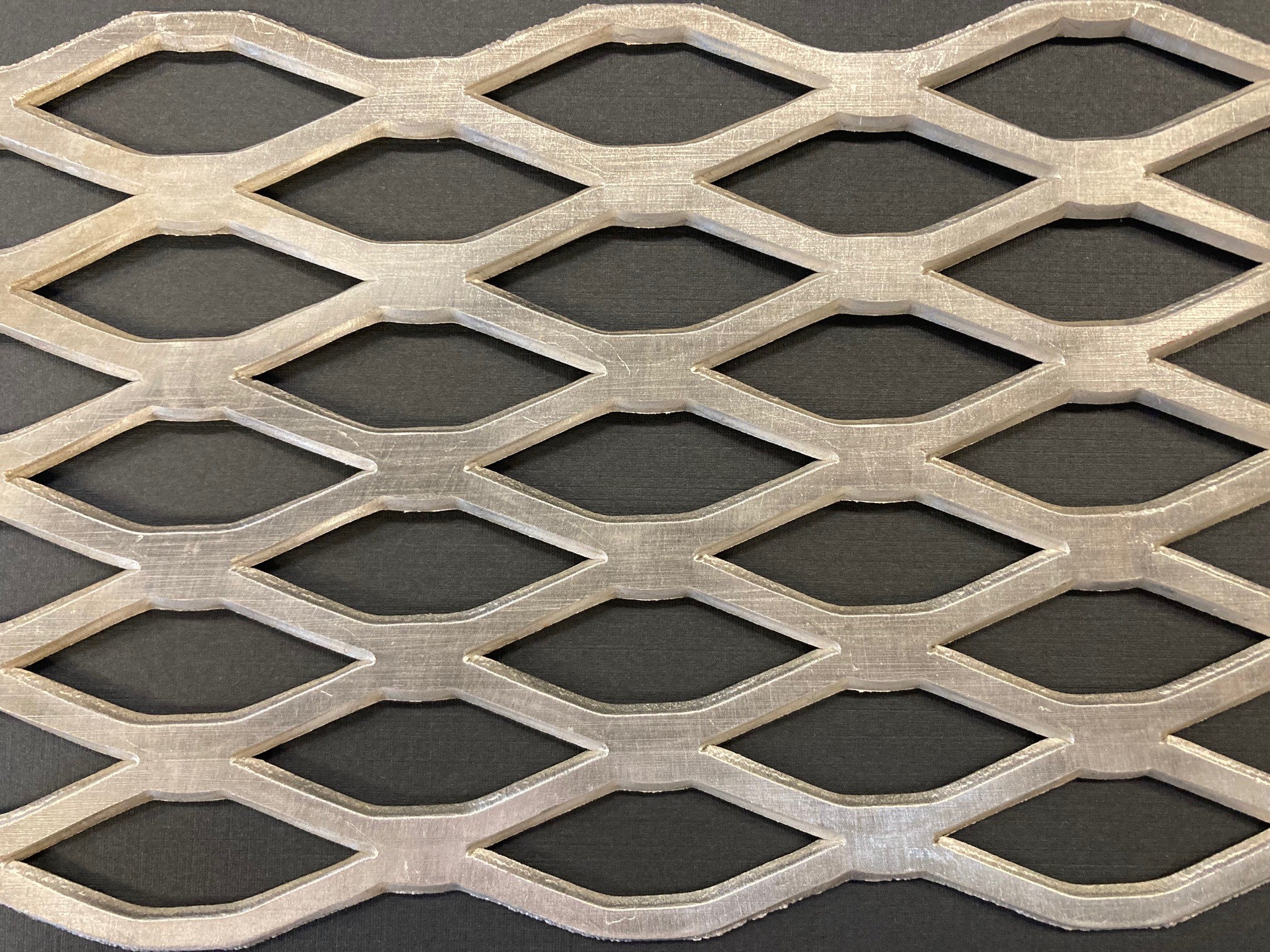
Expanded metal is one of the most versatile products a steel supplier can offer. Created by simultaneously slitting and stretching a sheet of metal, it forms a continuous pattern of openings without any welding or joining. Expanded metal is a type of sheet metal that has been cut and stretched to form a regular pattern of diamond mesh-like material. This process not only reduces material waste but also produces a product with impressive strength-to-weight characteristics. For buyers, understanding the different types of expanded metal can make the difference between choosing a material that simply works and one that performs exceptionally well over time.
Commonly used for machine safety guards, grates, glass protection. At the most basic level, expanded metal is categorized by how it leaves the press. Standard (or "raised") expanded metal retains the ridged texture created during the expansion process. Those ridges give the material added stiffness and slip resistance, making it a popular choice for walkways, ramps, and industrial flooring. Because the surface is not flattened, it also provides better traction in environments where safety is a concern, such as manufacturing plants or outdoor platforms exposed to moisture.
Flattened expanded metal, on the other hand, is passed through rollers after expansion to create a smoother, level surface. This secondary process slightly reduces thickness but results in a more refined appearance and improved handling characteristics. Customers often prefer flattened expanded metal for applications like fencing, machine guards, or architectural features where aesthetics and a clean finish matter as much as strength. It's also easier to cut, weld, and fabricate compared to its raised counterpart.
Another important distinction comes from the size and proportion of the openings, often referred to as mesh size. Larger mesh patterns allow for maximum airflow, light transmission, and visibility, which is why they're commonly used in security fencing, enclosures, and screening applications. Smaller mesh sizes provide greater rigidity and containment, making them better suited for filtration, grating, or protective barriers where finer control is needed.
Expanded Metal (Ex-Metal) is supplied in Flattened or Standard, which has a Raised Diamond Pattern. Common materials for Expanded Metal include Carbon, Aluminum and Stainless Steel. Options for heavier applications can be supplied in Expanded Metal Grating and Catwalk Grating. Expanded Metal is available in various sizes with a large selection of gauge thickness and diamond openings.
Properties of Expanded Metal
Expanded metal is a versatile metal product created by cutting and stretching a sheet of steel, producing a distinctive pattern of interconnected strands and openings. This manufacturing process allows expanded metal to provide strength and structural integrity while using less material than a solid sheet. Key expanded metal properties include strength-to-weight ratio, rigidity, ventilation, and visibility. Depending on the application, expanded metal can be produced from carbon steel, stainless steel, aluminum, and other metal alloys, with different thicknesses, strand sizes, and opening patterns available to meet specific performance requirements.
One of the primary advantages of expanded metal is its combination of durability and functionality. The interconnected design helps the material resist deformation while allowing air, light, and liquids to pass through, making it useful for machine guards, walkways, platforms, screens, partitions, grating, and architectural applications. Expanded metal can also be galvanized, painted, or otherwise finished to improve corrosion resistance and service life. For manufacturers and contractors, understanding the properties of expanded metal—including material type, thickness, opening size, strand dimensions, and load requirements—is essential when selecting the right product for a particular application.
Material type also plays a significant role in performance. Carbon steel expanded metal is widely used due to its affordability and strength, especially in structural or heavy-duty applications. When corrosion resistance becomes a priority, galvanized steel offers an added layer of protection through its zinc coating, extending service life in outdoor or humid environments. Aluminum expanded metal introduces a different set of advantages, including lightweight construction and natural corrosion resistance, making it ideal for architectural uses or applications where reducing load is critical. Stainless steel, while more expensive, delivers superior durability and resistance to both corrosion and extreme temperatures, making it indispensable in harsh or sanitary environments such as food processing or chemical facilities.
Suppliers may also differentiate expanded metal by strand width and thickness, both of which directly influence strength and load-bearing capacity. Thicker strands provide more structural integrity but reduce open area, while thinner strands increase visibility and airflow at the expense of strength. Balancing these factors is key when specifying material for a project, particularly when safety, weight, and cost all need to be considered.
Types of Expanded Metal (Quick Reference)
- Standard (Raised) Expanded Metal
Features a ridged, textured surface straight from the press. Offers excellent strength and slip resistance, making it ideal for walkways, ramps, and industrial flooring. - Flattened Expanded Metal
Cold-rolled after expansion to create a smooth, level surface. Easier to fabricate and more visually refined, commonly used for fencing, guards, and architectural elements. - Carbon Steel Expanded Metal
Strong, economical, and widely used for structural and general-purpose applications where corrosion resistance is not the primary concern. - Galvanized Expanded Metal
Coated with zinc for enhanced corrosion resistance. Suitable for outdoor environments, infrastructure, and areas exposed to moisture. - Aluminum Expanded Metal
Lightweight and naturally corrosion-resistant. Often selected for architectural, decorative, and applications where weight reduction is important. - Stainless Steel Expanded Metal
Provides superior corrosion resistance and durability in harsh or sanitary environments such as food processing or chemical industries. - Large Mesh Expanded Metal
Offers high visibility, airflow, and light transmission. Commonly used in fencing, screening, and security enclosures. - Small Mesh Expanded Metal
Delivers greater strength and containment with reduced open area. Ideal for filtration, guarding, and applications requiring finer control. - Heavy-Duty Expanded Metal
Manufactured with thicker strands and larger dimensions for high load-bearing applications such as platforms and grating. - Micro Expanded Metal
Features very small openings and thin strands. Used in specialized applications like filtration, electronics, and precision components.
Expanded metal offers savings in weight and metal, free passage of light, liquid, sound, and air, while providing a decorative or ornamental effect. The term "expanded metal" refers to the way the metal is simultaneously die-cut and expanded as it moves through the progressive dies on a press. This process allows it to be expanded up to 10 times its original size, while losing up to 80 percent of its original weight per square foot and retaining its form and rigidity. The expanded metal can be manufactured and supplied as standard mesh or can be flattened by further leveling to a smooth surface which allows usage of mesh in more applications such as prison protection and to avoid hurting hands touching the mesh.
Each expanded type has unique characteristics and advantages. The right expanded metal for a specific use depends on factors like strength, durability, and appearance. Some commonly used shapes are circles, squares, and diamonds; diamonds are the most popular shapes because of how well the shape absorbs energy and resists mechanical deformation after installation. Other design considerations are the size and angles of the shapes, which will also affect how well the metal absorbs energy and where the energy is spread throughout the expanded metal. For the diamond shape, there are at least four different angles that come into account: two acute and two obtuse angles.
Applications for Expanded Metal
Expanded metal is widely used across construction, manufacturing, industrial, and architectural applications because of its combination of strength, durability, and open-area design. Common expanded metal applications include machine guards, safety barriers, walkways, platforms, stair treads, ventilation screens, security panels, and protective enclosures. Its ability to allow air, light, and liquids to pass through while providing a durable metal surface makes it a practical choice for many industrial and commercial projects. Expanded metal is available in a variety of materials, thicknesses, opening patterns, and sizes, allowing steel suppliers to provide options suited to specific performance requirements.
In architectural and fabrication applications, expanded metal can also be used for fencing, partitions, facades, ceilings, equipment screens, and decorative panels. Carbon steel expanded metal is often selected for its strength and cost-effectiveness, while galvanized and stainless steel options can provide enhanced corrosion resistance in demanding environments. When selecting expanded metal, factors such as material, sheet thickness, opening size, strand dimensions, load requirements, and intended use should be considered. Working with an experienced steel supplier can help customers select the appropriate expanded metal product for their project and fabrication needs.
In recent years, expanded metal has gained traction in architectural and design-focused projects. Its combination of texture, transparency, and structural performance allows designers to create facades, sunscreens, and interior elements that are both functional and visually striking. Coatings and finishes, such as powder coating or anodizing, further expand its design potential while adding protection against environmental wear.
For steel suppliers, offering a range of expanded metal options isn't just about inventory—it's about helping customers match the right material to the right application. Whether the priority is strength, appearance, corrosion resistance, or cost efficiency, understanding the nuances between types of expanded metal ensures better outcomes and longer-lasting results. As demand continues to grow across industrial and architectural sectors alike, expanded metal remains a product where small specification details can have a big impact.
Expanded metal is easy to weld, cut, and form with proper equipment. The applications of expanded metal include security, sifting, machinery guards, flooring, walkways, shelving, window protection, etc.