

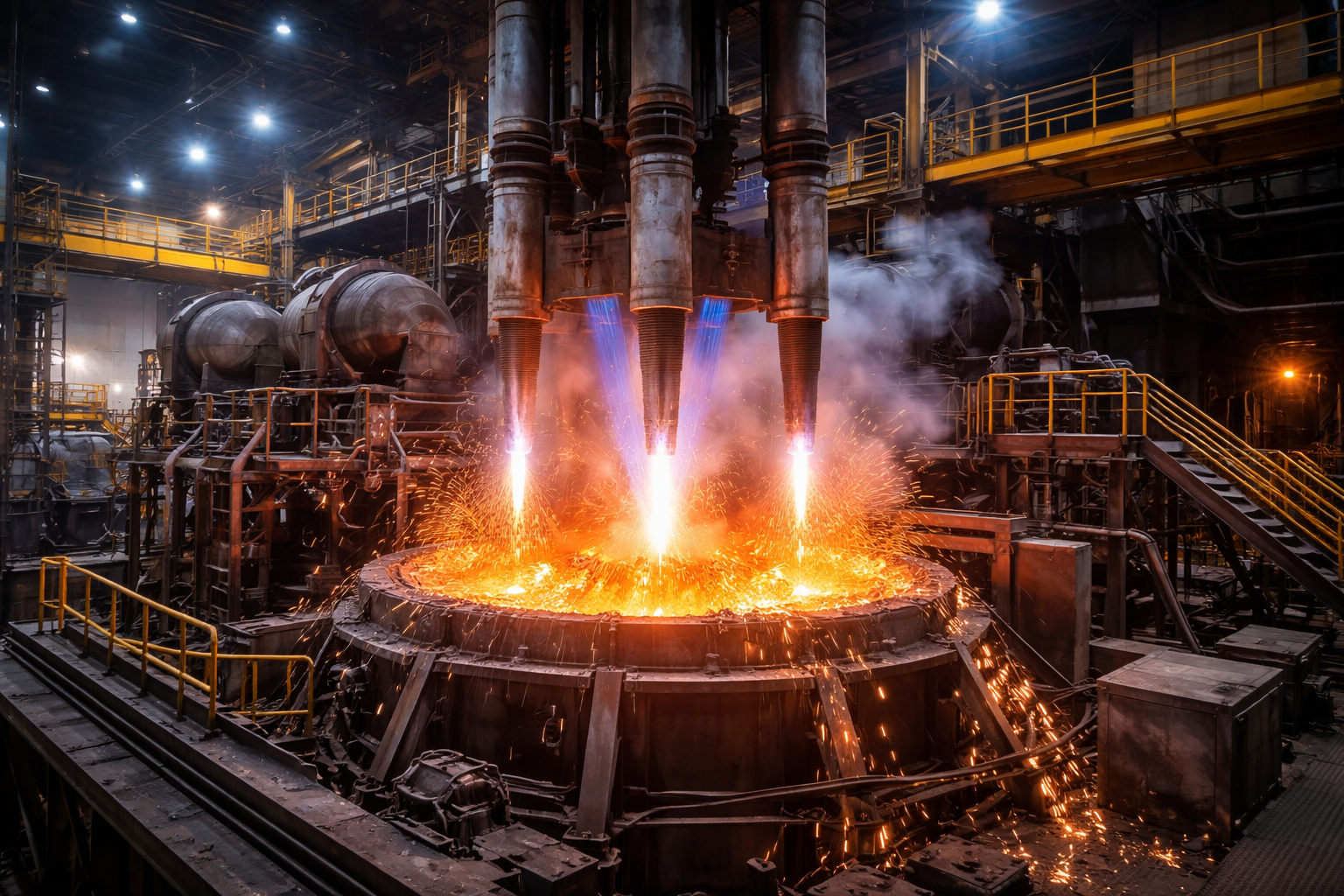
Understanding Electric Arc Furnace (EAF) Steel Production
Electric Arc Furnace (EAF) steelmaking has become a cornerstone of modern steel production in the United States. Known for its efficiency, flexibility, and sustainability advantages, EAF technology plays a critical role in meeting today's steel demand while supporting environmental and operational goals across multiple industries.
What Is Electric Arc Furnace (EAF) Steel?
EAF steel is produced by melting recycled steel scrap using high-powered electric arcs. Unlike traditional blast furnace operations that rely on iron ore and coke, EAF steelmaking primarily uses scrap steel as its raw material, making it a highly efficient and circular manufacturing process.
Once the scrap is melted, the molten steel is refined, alloyed, and cast into semi-finished or finished products such as sheet, plate, bar, or structural shapes.
How the EAF Process Works
The EAF process is designed for speed and precision:
-
Charging the furnace with carefully graded scrap steel
-
Melting the scrap using electric arcs generated between graphite electrodes
-
Refining the steel to achieve the desired chemistry and mechanical properties
-
Tapping the furnace and casting the molten steel into usable forms
This process allows for tight control over composition, making EAF steel suitable for a wide range of applications.
Advantages of EAF Steel Production
Electric Arc Furnace steel offers several key benefits compared to traditional steelmaking methods:
-
Lower carbon footprint due to reduced reliance on iron ore and fossil fuels
-
High recycling rates, supporting circular economy initiatives
-
Energy efficiency, particularly when powered by renewable electricity
-
Flexible production, allowing mills to adjust output quickly based on demand
-
Consistent quality, ideal for meeting strict industry specifications
These advantages have driven significant investment in EAF facilities across North America.
Sustainability and EAF Steel
EAF steelmaking is widely recognized as a lower-emissions pathway for steel production. By using recycled scrap and electricity rather than coke-fired blast furnaces, EAF mills typically generate substantially fewer greenhouse gas emissions per ton of steel produced.
As customers increasingly seek low-carbon steel solutions, EAF-produced steel is becoming a preferred option for industries focused on sustainability, including construction, energy, automotive, and manufacturing.
Common Applications of EAF Steel
EAF-produced steel is used in a broad range of applications, including:
-
Structural beams and columns
-
Sheet and coil products
-
Plate steel
-
Rebar and wire rod
-
Energy and infrastructure components
Advancements in metallurgy and process control have expanded EAF capabilities, allowing production of higher-strength and more demanding grades.
EAF Steel in the U.S. Supply Chain
Electric Arc Furnaces now account for the majority of steel production in the United States. This shift supports a more resilient domestic supply chain by reducing dependence on imported raw materials and enabling faster response to market needs.
For steel suppliers and service centers, EAF steel provides dependable availability, consistent performance, and alignment with customer sustainability goals.
Looking Ahead
As technology continues to evolve, Electric Arc Furnace steel production will remain central to the future of the steel industry. Ongoing improvements in scrap sorting, furnace efficiency, and energy sourcing are further strengthening EAF steel's role in producing high-quality, responsibly sourced steel.
Electric Arc Furnace steel represents the intersection of performance, efficiency, and sustainability. By transforming recycled scrap into high-quality steel products, EAF mills support both industrial growth and environmental responsibility—making EAF-produced steel a smart choice for today's evolving steel market.