

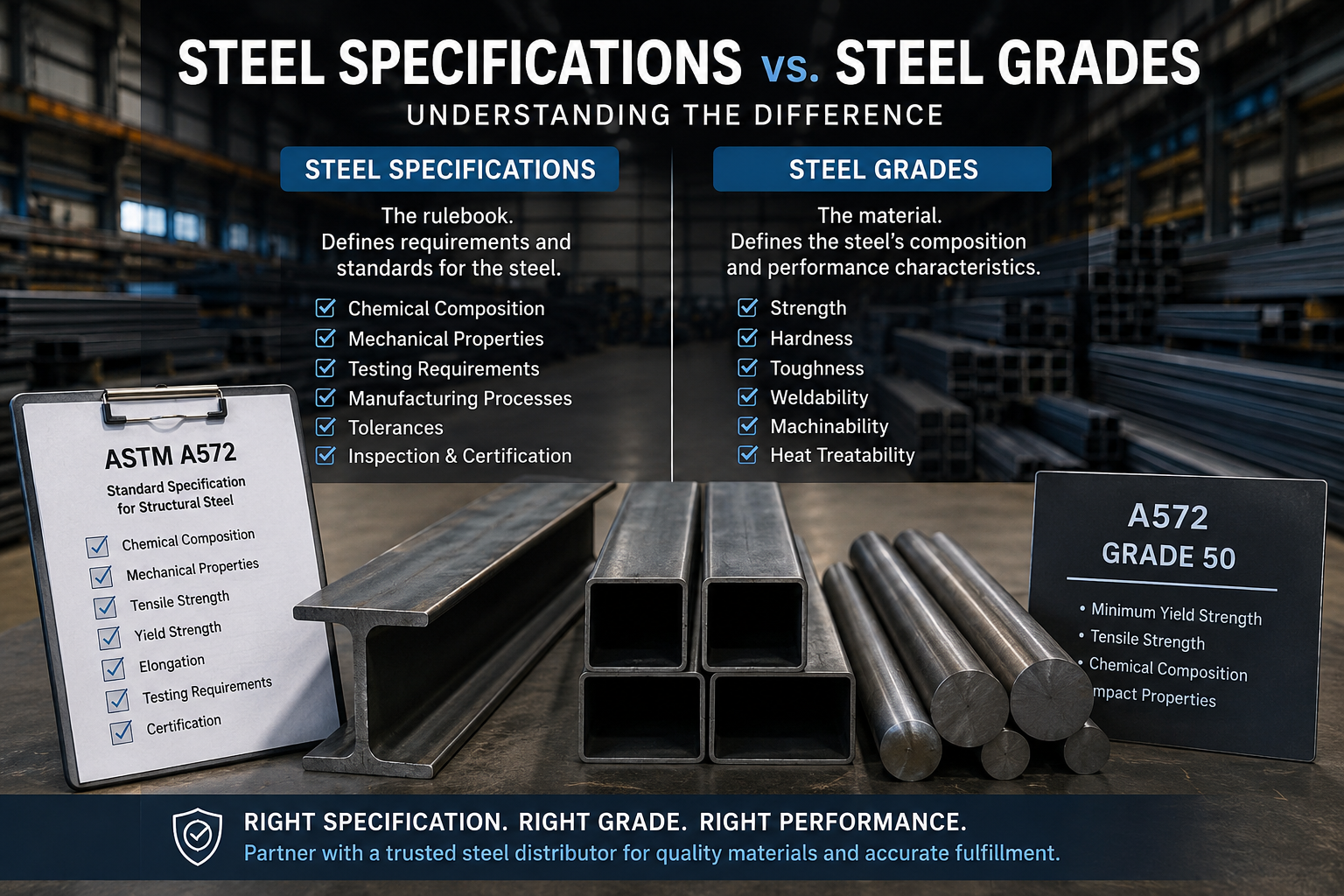
Steel distributors often receive questions from customers who use the terms steel specifications and steel grades interchangeably. While they are closely related, they are not the same. Understanding the difference can help manufacturers, fabricators, engineers, and purchasing professionals select the right material, ensure compliance with project requirements, and avoid costly mistakes.
Steel Specifications vs. Steel Grades: What's the Difference?
When ordering steel for manufacturing, construction, or industrial applications, you'll often encounter the terms steel specifications and steel grades. Although these terms are commonly used together, they refer to different aspects of a steel product. Knowing the distinction is essential for selecting the right material, meeting engineering requirements, and maintaining quality standards.
What Are Steel Specifications?
A steel specification is a standardized document that defines the requirements a steel product must meet. Specifications are developed by recognized organizations such as ASTM International, SAE, AISI, ASME, API, and others. These standards establish criteria for:
- Chemical composition
- Mechanical properties
- Manufacturing processes
- Heat treatment requirements
- Dimensional tolerances
- Testing procedures
- Inspection requirements
- Surface finish requirements
- Marking and certification
Steel specifications ensure consistency across manufacturers, allowing buyers to purchase steel with confidence that it will perform as expected.
For example, ASTM A36 is a specification for carbon structural steel used extensively in buildings, bridges, and structural fabrication. The specification outlines the minimum mechanical properties and chemical requirements that the steel must satisfy.
What Is a Steel Grade?
A steel grade identifies a specific type or classification of steel based primarily on its chemical composition and mechanical properties. A grade describes the characteristics that make one steel suitable for certain applications over another.
A steel grade typically indicates factors such as:
- Carbon content
- Alloying elements
- Strength
- Hardness
- Toughness
- Wear resistance
- Weldability
- Machinability
- Heat treatability
Examples of common steel grades include:
- 1018 Steel
- 1045 Steel
- 4140 Alloy Steel
- 4340 Alloy Steel
- A572 Grade 50
- A514 Grade B
Each grade offers a unique balance of properties designed for specific industries and applications.
The Relationship Between Specifications and Grades
One of the reasons people confuse these terms is because they frequently appear together.
Think of it this way:
- A specification tells manufacturers how the steel must be produced, tested, and certified.
- A grade identifies the material's composition and performance characteristics.
For example:
ASTM A572 Grade 50
In this designation:
- ASTM A572 is the steel specification.
- Grade 50 identifies the minimum yield strength and class of steel within that specification.
Similarly:
ASTM A514 Grade B
- ASTM A514 is the governing specification.
- Grade B identifies one specific material within that specification.
Why the Difference Matters
Selecting steel by grade alone may not satisfy project requirements.
Many engineering drawings, government contracts, and customer purchase orders require compliance with an exact specification because it includes testing, certification, and quality assurance requirements beyond simply achieving certain mechanical properties.
Using the wrong specification—even if the grade appears similar—can result in:
- Project delays
- Failed inspections
- Rejected material
- Increased costs
- Reduced performance
- Warranty issues
Working with an experienced steel distributor helps ensure the material supplied meets both the required specification and grade.
Common Steel Specifications
Some of the most frequently requested steel specifications include:
| Specification | Typical Use |
|---|---|
| ASTM A36 | Structural steel |
| ASTM A572 | High-strength structural steel |
| ASTM A514 | Quenched and tempered alloy plate |
| ASTM A588 | Weathering steel |
| ASTM A516 | Pressure vessel plate |
| ASTM A500 | Structural tubing |
| ASTM A53 | Steel pipe |
| ASTM A108 | Cold-finished carbon steel bars |
Common Steel Grades
Examples of popular steel grades include:
- 1018
- 1020
- 1045
- 1117
- 12L14
- 4140
- 4142
- 4340
- 8620
- Grade 36
- Grade 50
- Grade B
Each offers different levels of strength, hardness, ductility, corrosion resistance, and machinability depending on the intended application.
Mill Test Reports Verify Compliance
A Mill Test Report (MTR) or Mill Test Certificate (MTC) documents that the steel complies with the required specification and grade. These reports typically include:
- Heat number
- Chemical analysis
- Mechanical test results
- Yield strength
- Tensile strength
- Elongation
- Hardness (when applicable)
- Certification to applicable specifications
Many manufacturers require MTRs for quality control and full material traceability.
Choosing the Right Steel
Choosing steel involves much more than selecting a grade. Engineers and buyers should consider:
- Required specification
- Mechanical performance
- Environmental conditions
- Fabrication methods
- Weldability
- Machining requirements
- Heat treatment needs
- Corrosion resistance
- Industry standards
An experienced steel distributor such as ECONSTEEL can help interpret engineering drawings, identify equivalent materials when appropriate, and provide certified steel that meets project requirements.
Whether you need carbon steel, alloy steel, steel plate, steel bar, tubing, or structural steel, understanding the difference between steel specifications and steel grades helps ensure your project receives the correct material from the start.
A knowledgeable steel distributor can provide certified materials, Mill Test Reports, and technical guidance to help manufacturers minimize risk, improve production efficiency, and maintain compliance with industry standards.