

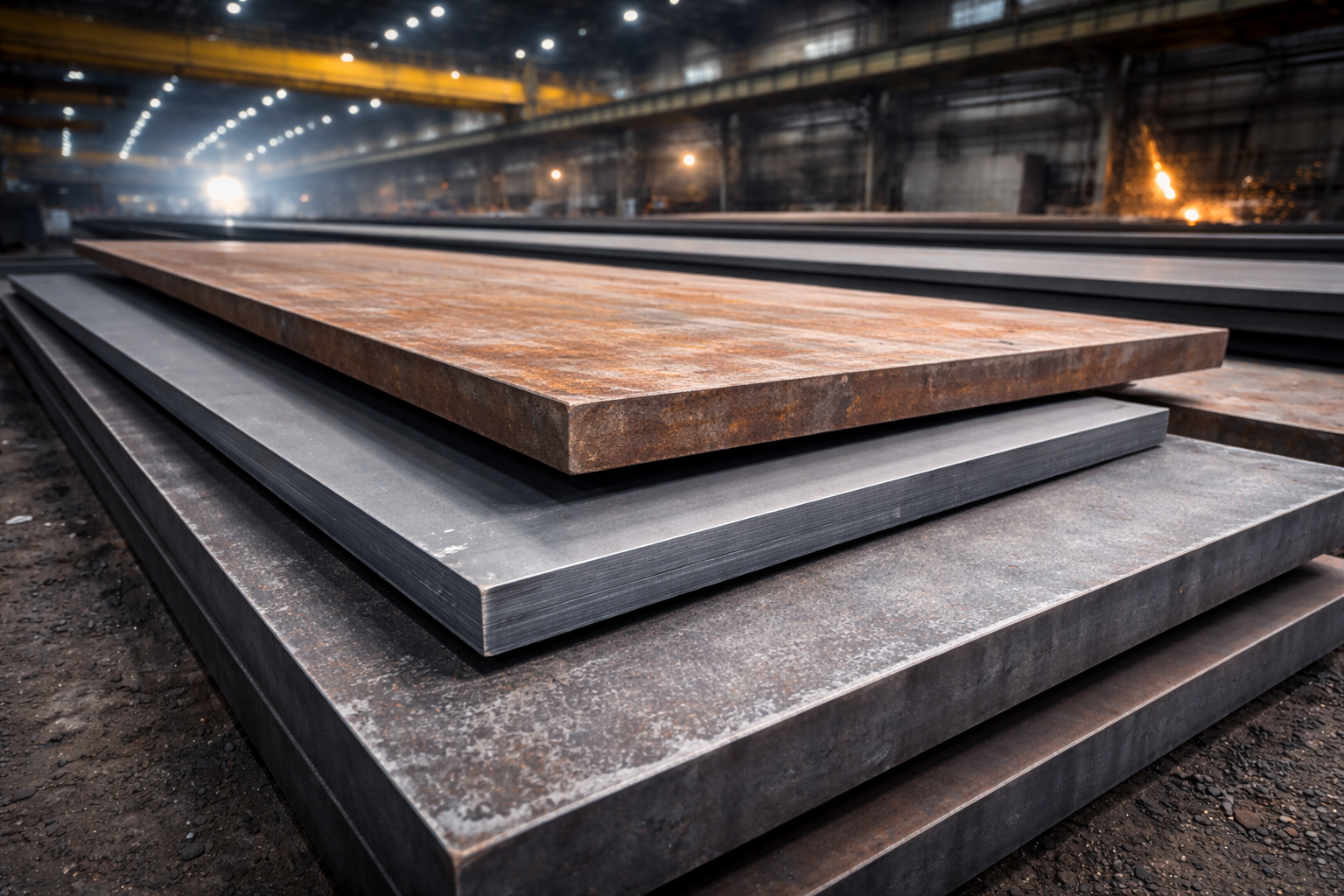
Steel Plate Grades Explained: A36 vs A572 vs A588 vs AR Plate
Choosing the right steel plate grade is critical to performance, cost efficiency, and long-term durability. With multiple ASTM steel plate grades available, understanding the differences between A36, A572, A588, and abrasion-resistant (AR) plate can help ensure your material selection aligns with project requirements.
Below we break down the most commonly used steel plate grades, their properties, and typical applications.
What Are Steel Plate Grades?
Steel plate grades are standardized specifications that define chemical composition, mechanical properties, and performance characteristics. In the United States, most steel plate grades follow ASTM standards, which ensure consistency across mills and suppliers.
Selecting the correct grade impacts:
-
Strength and load capacity
-
Weldability and fabrication
-
Corrosion resistance
-
Wear performance
-
Overall project lifespan
A36 Steel Plate: The Industry Standard
ASTM A36 steel plate is the most widely used carbon steel plate due to its versatility and affordability.
Key Characteristics
-
Minimum yield strength: 36 ksi
-
Excellent weldability
-
Easy to machine and form
-
Cost-effective
Common Applications
-
Structural components
-
Base plates and gussets
-
General fabrication
-
Construction projects
Best for: Non-critical structural applications where strength requirements are moderate and cost control is important.
A572 Steel Plate: Higher Strength Structural Steel
ASTM A572 steel plate offers higher strength than A36 while maintaining good weldability. It is commonly specified in structural applications where weight reduction or higher load capacity is required.
Key Characteristics
-
Available in multiple grades (Grade 42, 50, 60, 65)
-
Higher yield strength than A36
-
Improved strength-to-weight ratio
Common Applications
-
Bridges and infrastructure
-
Structural beams and columns
-
Heavy equipment frames
Best for: Projects requiring higher strength without significantly increasing material thickness.
A588 Steel Plate: Weathering Steel for Corrosion Resistance
ASTM A588 steel plate, often referred to as weathering steel, is designed to form a protective oxide layer when exposed to the elements. This reduces long-term corrosion and maintenance costs.
Key Characteristics
-
Enhanced atmospheric corrosion resistance
-
Eliminates or reduces the need for painting
-
High strength compared to A36
Common Applications
-
Bridges and highway structures
-
Outdoor architectural elements
-
Transmission towers
Best for: Outdoor applications where corrosion resistance and reduced maintenance are priorities.
AR Plate: Abrasion-Resistant Steel Plate
Abrasion-resistant (AR) steel plate is engineered for wear resistance rather than structural strength. AR plate is heat-treated to withstand severe abrasion and impact.
Key Characteristics
-
Hardness measured in Brinell (AR400, AR450, AR500)
-
Exceptional wear resistance
-
Reduced material replacement cycles
Common Applications
-
Mining and quarry equipment
-
Chutes, liners, and hoppers
-
Material handling systems
Best for: High-wear environments where abrasion is the primary concern.
| Steel Plate Grade | Primary Benefit | Typical Use |
|---|---|---|
| A36 | Versatility and cost | General structural |
| A572 | Higher strength | Infrastructure, heavy structures |
| A588 | Corrosion resistance | Outdoor structures |
| AR Plate | Wear resistance |
Mining, material handling |
How to Choose the Right Steel Plate Grade
When selecting a steel plate grade, consider:
-
Load requirements and stress levels
-
Exposure to weather or corrosive environments
-
Abrasion and impact conditions
-
Fabrication and welding needs
-
Total lifecycle cost, not just initial price
Working with an experienced steel plate supplier can help ensure the selected grade meets both performance and budget expectations. Understanding the differences between A36, A572, A588, and AR steel plate is essential for making informed material decisions. Each grade serves a distinct purpose, and selecting the correct one can improve safety, efficiency, and long-term project success.
For buyers, engineers, and fabricators, knowledge of steel plate grades translates directly into better outcomes—on the job site and on the balance sheet.