

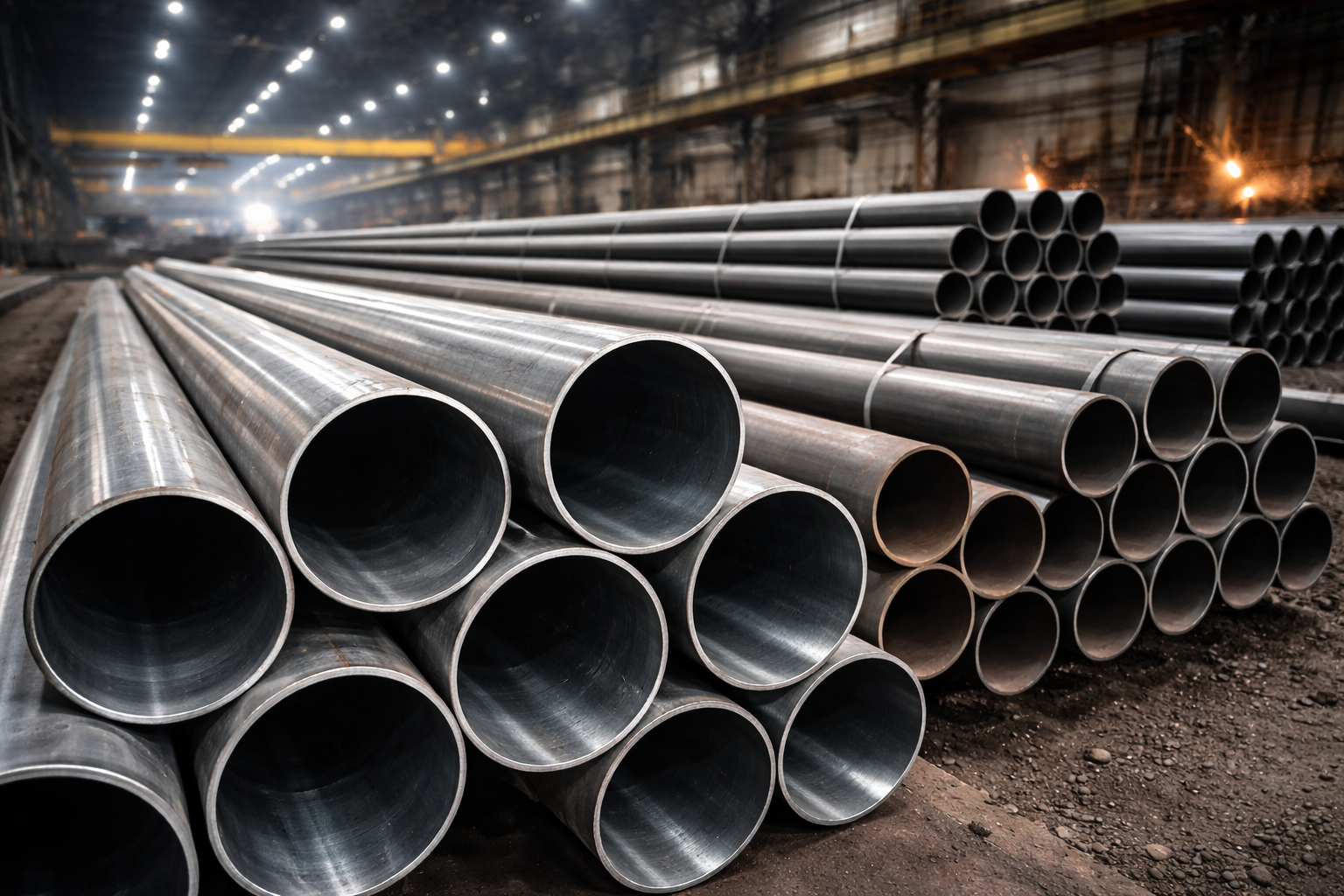
Steel Pipe Grades and Types Explained: ASTM, ERW, Seamless, and API Pipe
Steel pipe is a critical material across construction, energy, manufacturing, and infrastructure projects. With multiple grades, standards, and manufacturing methods available, selecting the right steel pipe requires an understanding of both performance requirements and applicable specifications.
This guide explains the most common steel pipe grades and types, including ASTM, ERW, seamless, and API pipe, to help buyers and engineers make informed decisions.
What Is Steel Pipe?
Steel pipe is a hollow, cylindrical steel product designed to transport fluids, gases, or structural loads. It is manufactured in various sizes, wall thicknesses, and grades to meet specific pressure, strength, and environmental requirements.
Steel pipe specifications in the U.S. are typically governed by ASTM and API standards to ensure quality and consistency.
Common Steel Pipe Manufacturing Types
Understanding how steel pipe is made is essential when selecting the appropriate product for an application.
ERW Steel Pipe (Electric Resistance Welded)
ERW steel pipe is produced by cold-forming steel strip into a cylindrical shape and welding the seam using electric resistance.
Key characteristics:
-
Consistent wall thickness
-
Cost-effective
-
Suitable for low to medium pressure applications
Typical applications:
-
Structural tubing
-
Water and gas lines
-
Fencing and mechanical uses
Seamless Steel Pipe
Seamless steel pipe is manufactured without a welded seam, making it ideal for high-pressure and high-temperature environments.
Key characteristics:
-
Superior strength and pressure resistance
-
Uniform structure
-
Higher cost than ERW pipe
Typical applications:
-
Oil and gas
-
Boilers and heat exchangers
-
High-pressure pipelines
ASTM Steel Pipe Grades Explained
ASTM A53 Steel Pipe
ASTM A53 is one of the most commonly specified carbon steel pipe grades.
-
Used for mechanical and pressure applications
-
Available in ERW and seamless
-
Common in water, gas, and steam service
ASTM A106 Steel Pipe
ASTM A106 seamless steel pipe is designed for high-temperature service.
-
Seamless construction only
-
Excellent heat resistance
-
Common in refineries and power plants
ASTM A500 Steel Pipe
ASTM A500 is a structural steel tubing specification.
-
Used for structural and load-bearing applications
-
Square, rectangular, and round shapes
-
Not intended for pressure service
API Steel Pipe for Energy Applications
API steel pipe is manufactured to American Petroleum Institute standards for oil and gas transmission.
API 5L Steel Pipe
API 5L pipe is used in pipeline transportation systems.
-
Designed for high-pressure service
-
Available in ERW and seamless
-
Used in upstream and midstream energy projects
Choosing the Right Steel Pipe
When selecting steel pipe, consider:
-
Pressure and temperature requirements
-
Structural vs. fluid transport use
-
Applicable ASTM or API standards
-
Wall thickness and diameter
-
Project environment and lifecycle cost
Working with an experienced steel pipe supplier helps ensure the pipe meets specification, availability, and delivery timelines.
Steel Pipe Applications Across Industries
Steel pipe is used in:
-
Construction and structural frameworks
-
Oil and gas pipelines
-
Water and wastewater systems
-
Manufacturing and processing facilities
-
Power generation and energy infrastructure
Understanding steel pipe grades and manufacturing types is essential for selecting the right material for your application. Whether choosing ERW pipe for structural use, seamless pipe for high-pressure service, or API pipe for energy transmission, proper specification ensures safety, efficiency, and long-term performance.
For engineers, buyers, and contractors, informed steel pipe selection leads to better project outcomes and cost control.