

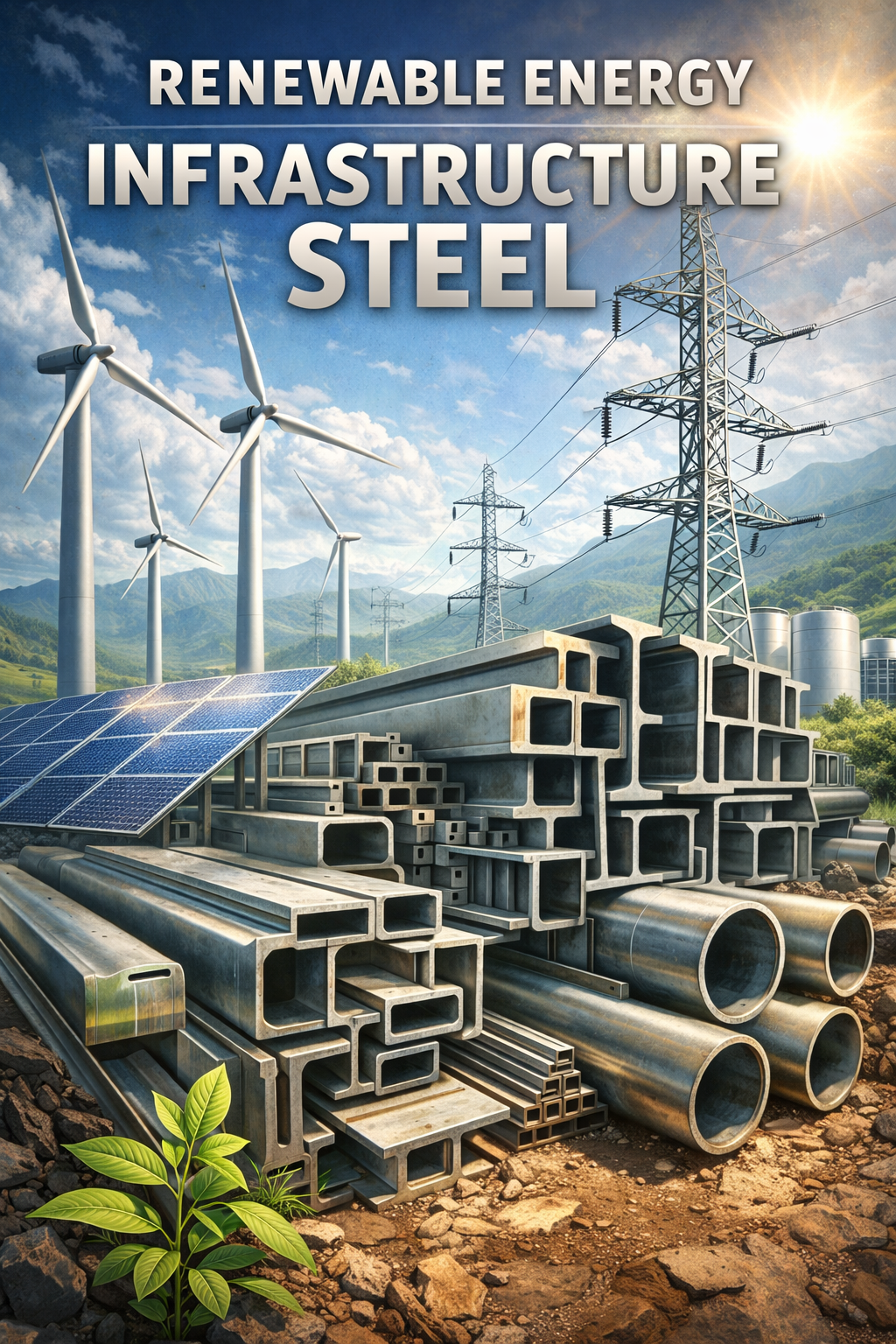
Renewable Energy Infrastructure Steel: A Growing Driver of Steel Demand
The global transition toward renewable energy is reshaping infrastructure investment—and with it, steel demand across multiple product categories. From wind farms and solar installations to transmission networks and energy storage facilities, renewable energy infrastructure is emerging as one of the most significant long-term growth drivers for the steel industry.
Infrastructure Expansion Fuels Steel Demand
Renewable energy projects are infrastructure-intensive by design. Utility-scale wind turbines, solar arrays, substations, and grid upgrades all rely heavily on steel for structural integrity, durability, and lifecycle performance. As governments, utilities, and private investors accelerate spending on clean energy infrastructure, steel demand is increasing not only in volume but also in specification complexity.
Key infrastructure applications driving steel demand include:
-
Wind turbine towers, nacelles, and foundations
-
Solar racking systems and mounting structures
-
Transmission towers and grid interconnections
-
Energy storage facilities and hydrogen infrastructure
-
Offshore wind platforms and marine foundations
These projects require a broad mix of plate, structural shapes, tubular products, and engineered steel solutions.
Product Mix Shifts Within the Steel Market
Renewable energy infrastructure is influencing not just how much steel is used, but what kind. Demand is rising for:
-
Heavy plate and large-diameter pipe for wind towers and offshore structures
-
High-strength structural steel for transmission infrastructure
-
Galvanized and corrosion-resistant steel for long service life
-
Precision-fabricated steel to meet tight tolerances and safety standards
This shift favors steel producers and distributors that can supply consistent quality, traceability, and project-scale volumes—often under long-term contracts.
Long-Term Visibility for Infrastructure-Driven Demand
Unlike short-cycle construction markets, renewable energy infrastructure projects typically operate on multi-year development timelines. This provides greater visibility into future steel demand and supports more stable planning across the supply chain. As grid modernization and renewable capacity expansion continue, steel demand tied to infrastructure is expected to remain resilient even amid broader market volatility.
Additionally, many renewable projects are supported by public funding, incentives, or regulatory mandates, further reinforcing long-term demand fundamentals for steel.
Strategic Implications for the Steel Industry
For steel producers, service centers, and fabricators, renewable energy infrastructure represents both an opportunity and a strategic pivot point. Companies positioned to support large-scale infrastructure projects—through inventory depth, processing capabilities, and technical expertise—are better aligned with where steel demand is trending.
As renewable energy continues to scale, infrastructure investment will remain a central pillar of steel demand growth, reinforcing steel's critical role in building the next generation of energy systems.