

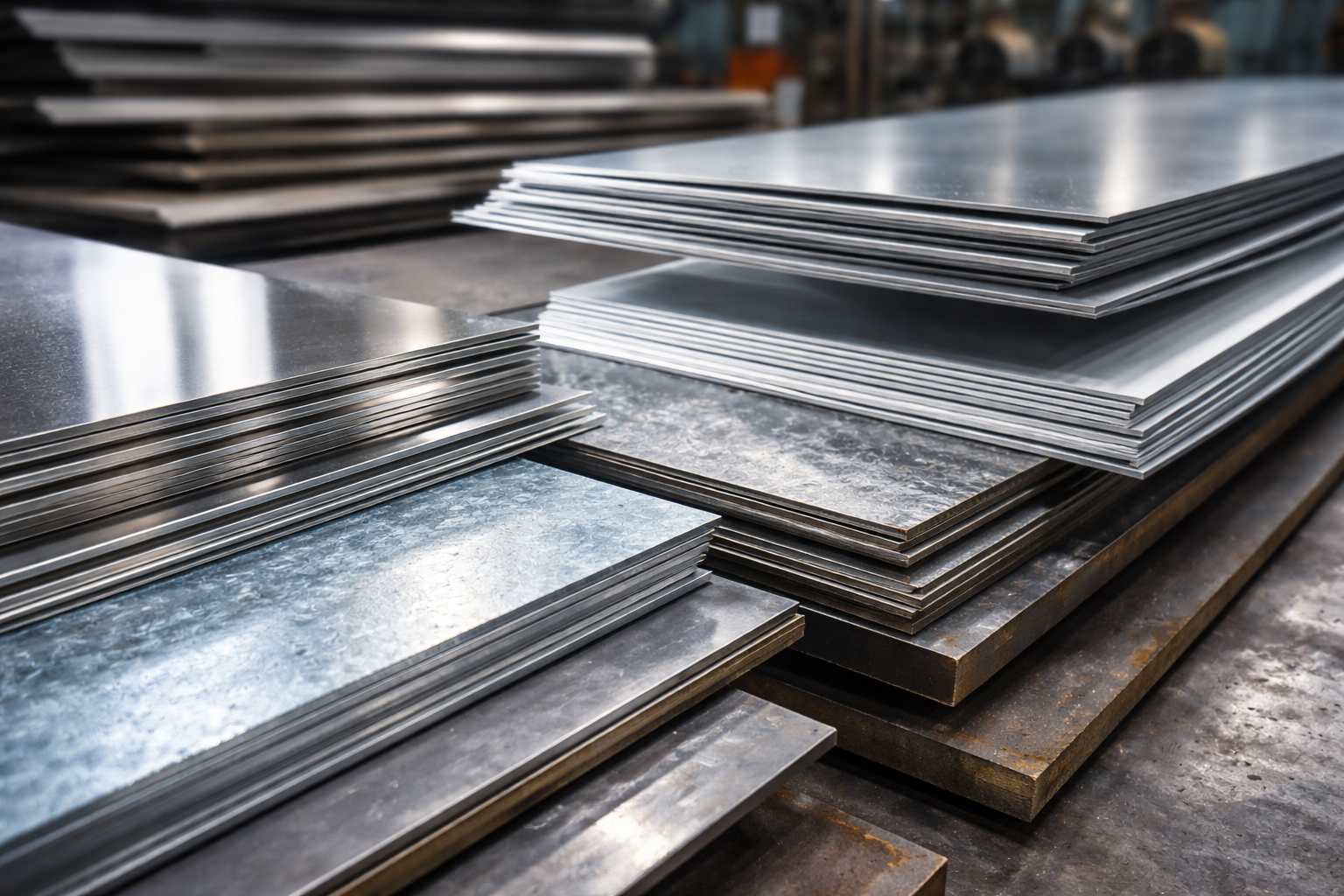
If you're sourcing material for fabrication, construction, or manufacturing, understanding metal sheet types and grades is critical. The right selection affects weldability, corrosion resistance, strength-to-weight ratio, lifecycle cost, and code compliance. Below is a structured breakdown of the most common sheet metal materials, their grades, and where they deliver the most value.
1. Carbon Steel Sheet (Mild & High-Strength)
Carbon steel sheet is the most widely used sheet metal due to cost-efficiency and mechanical versatility.
Common Grades and sheet metal grades
-
ASTM A36 – General structural steel; good weldability and machinability.
-
ASTM A1011 – Hot-rolled sheet for forming and structural uses.
-
ASTM A1008 – Cold-rolled sheet; tighter tolerances and smooth surface finish.
-
ASTM A572 – HSLA sheet for higher strength-to-weight applications.
Key Properties
-
High strength
-
Cost-effective
-
Excellent weldability (low-carbon grades)
-
Susceptible to corrosion without coating
Typical Applications
-
Structural components
-
Equipment enclosures
-
Automotive parts
-
General fabrication
2. Stainless Steel Sheet
Stainless steel sheet is specified where corrosion resistance and appearance matter for metal sheet types.
Stainless Steel Sheet Grades
-
304 stainless steel – Most common; excellent corrosion resistance and formability.
-
316 stainless steel – Superior corrosion resistance, especially in marine or chemical environments.
-
430 stainless steel – Magnetic, lower cost, moderate corrosion resistance.
Key Properties
-
Chromium-based corrosion resistance
-
High temperature tolerance
-
Hygienic and easy to clean
Typical Applications
-
Food processing equipment
-
Commercial kitchens
-
Medical devices
-
Architectural panels
3. Aluminum Sheet
Aluminum sheet is selected when lightweight performance and corrosion resistance are primary requirements.
Aluminum Sheet Grades
-
3003 aluminum – Excellent formability; common for roofing and siding.
-
5052 aluminum – High corrosion resistance; marine applications.
-
6061 aluminum – Structural strength; widely used in industrial applications.
Key Properties
-
Lightweight (approx. 1/3 weight of steel)
-
Naturally corrosion resistant
-
High thermal conductivity
-
Non-magnetic
Typical Applications
-
Transportation panels
-
HVAC systems
-
Marine fabrication
-
Signage
4. Galvanized Steel Sheet
Galvanized sheet metal is carbon steel coated with zinc for corrosion protection.
Common Grades
-
ASTM A653 – Standard specification for zinc-coated steel sheet.
-
G90 galvanized – Higher zinc coating weight for enhanced corrosion resistance.
Key Properties
-
Sacrificial zinc coating
-
Extended service life outdoors
-
Cost-effective corrosion protection
Typical Applications
-
HVAC ductwork
-
Roofing panels
-
Agricultural buildings
-
Electrical enclosures
How to Choose the Right Metal Sheet
When evaluating sheet metal materials, consider:
-
Environment – Indoor vs. marine vs. chemical exposure
-
Mechanical load – Yield strength and tensile requirements
-
Fabrication process – Forming, welding, machining
-
Surface finish – Cosmetic vs. industrial
-
Budget constraints – Lifecycle cost vs. upfront material cost
For example:
-
Structural fabrication → A36 or A572
-
Food-grade application → 304 or 316 stainless
-
Lightweight structural → 6061 aluminum
-
Outdoor enclosure → G90 galvanized
Selecting the right sheet metal is not simply a matter of material preference — it is a technical decision that directly impacts performance, fabrication efficiency, compliance, and total lifecycle cost.
Whether you are specifying carbon steel for structural strength, stainless steel for corrosion resistance, aluminum for lightweight applications, or galvanized sheet for cost-effective durability, understanding grades and material properties ensures you avoid over-engineering or under-specifying your project.
From A36 vs. A572 structural steel, to 304 vs. 316 stainless, to 5052 vs. 6061 aluminum, grade selection determines:
-
Yield strength and tensile capacity
-
Weldability and formability
-
Corrosion resistance performance
-
Surface finish and aesthetic outcome
-
Long-term maintenance requirements
In today's competitive manufacturing and construction environment, informed material selection is a strategic advantage. The more precisely you align sheet metal type and grade with your application requirements, the more predictable your fabrication process and project outcomes will be.
If you're evaluating sheet metal for an upcoming job, reviewing specifications, or comparing grades for cost optimization, working with a knowledgeable supplier can streamline the decision process and help ensure you get the right material — at the right specification — the first time.