

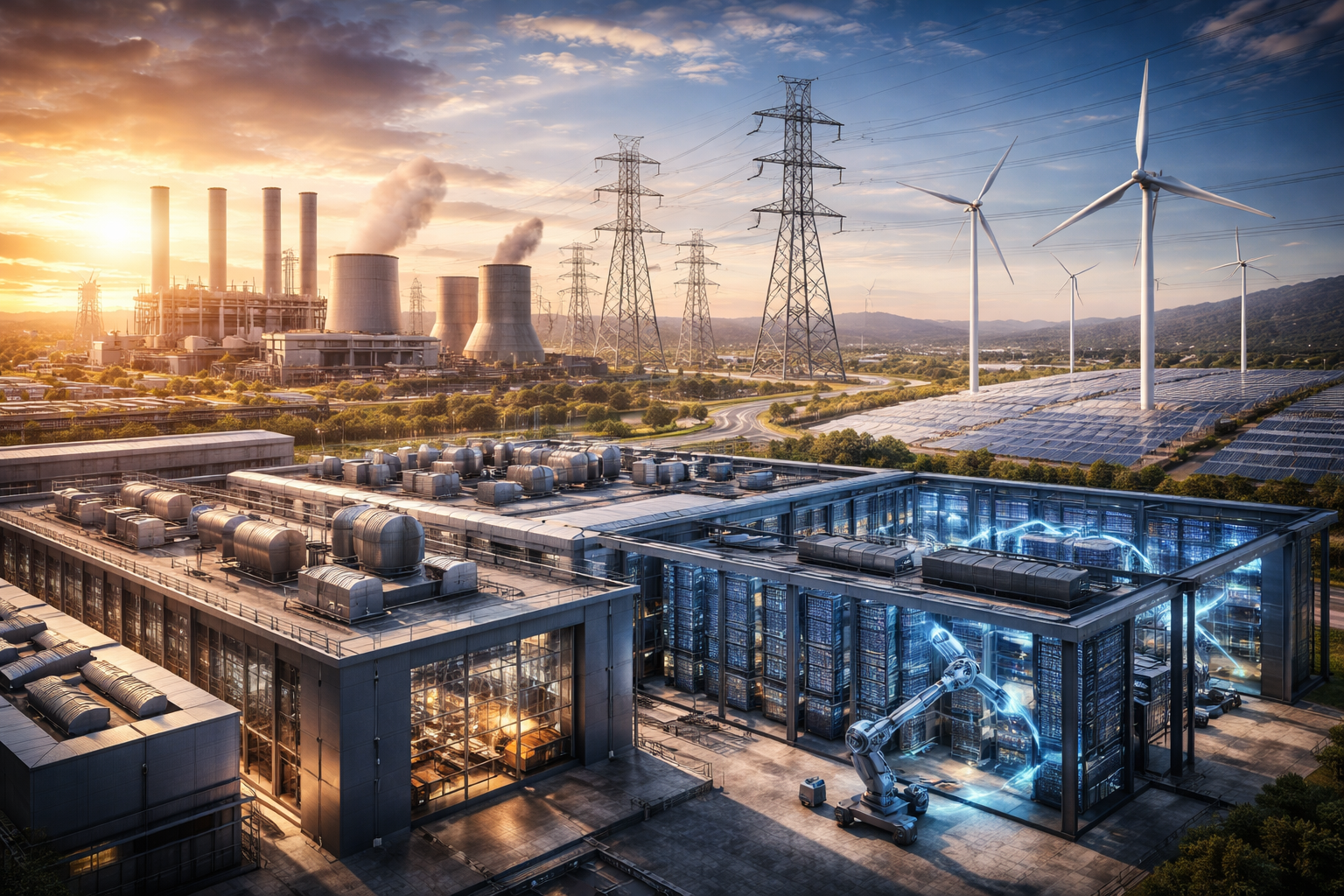
A major force reshaping the steel industry right now is the explosive growth of data centers, artificial intelligence (AI), and energy infrastructure. These sectors require enormous quantities of structural, electrical, and specialty steel, making them among the most important demand drivers for steel suppliers in 2025–2026 and beyond. For distributors, fabricators, and service centers, understanding this trend is critical for inventory planning, forecasting, and customer outreach.
Why AI Is Creating a Steel Boom
Artificial intelligence isn't just software — it runs on massive physical infrastructure.
Training AI models and operating cloud platforms require hyperscale data centers filled with servers, cooling systems, power equipment, and structural support. Each facility consumes thousands of tons of steel.
Steel used in AI data centers includes:
-
Structural beams and columns
-
Steel decking and framing
-
Reinforcing bar (rebar)
-
Cable trays and enclosures
-
Equipment platforms and racks
-
Security fencing and site structures
Modern hyperscale facilities are essentially industrial plants for computing, built to withstand heavy loads, vibration, and long service life. 🔩
The Hyperscale Data Center Construction Surge
Major technology companies are building large campuses across North America to support cloud computing and AI workloads.
These facilities demand:
-
Large clear-span structures
-
High floor load capacity
-
Precision fabrication
-
Rapid construction timelines
Steel is preferred because it offers:
✅ High strength-to-weight ratio
✅ Speed of erection
✅ Design flexibility
✅ Fire resistance options
✅ Long-term durability
Warehouses once dominated industrial construction — now hyperscale data centers rival or exceed them in steel intensity per square foot.
Energy Infrastructure: The Power Behind AI ⚡
AI computing requires enormous electrical power — often comparable to small cities. This has triggered a parallel boom in energy infrastructure projects.
Steel-intensive components include:
-
Transmission towers and poles
-
Substations and switchgear structures
-
Transformer housings
-
Turbine towers
-
Pipeline systems
-
Battery storage enclosures
Without grid expansion, new data centers cannot operate. As a result, steel demand is rising not just from tech companies but also from utilities and energy developers.
Renewable and Conventional Energy Projects
Both renewable and conventional energy sources require heavy steel inputs.
Wind Energy
-
Turbine towers (primarily tubular steel)
-
Foundations and anchor systems
-
Offshore platforms
Solar Energy
-
Panel mounting structures
-
Support frames
-
Tracking systems
Natural Gas & Nuclear
-
Pressure vessels
-
Piping systems
-
Structural steel
-
Safety containment components
Energy diversification means steel demand comes from multiple directions simultaneously. 🌎
Cooling Systems: A Hidden Steel Consumer ❄️
AI hardware generates significant heat, requiring advanced cooling systems — many of which rely heavily on steel components.
Examples include:
-
Cooling towers
-
Heat exchangers
-
Chilled water piping
-
Mechanical equipment supports
-
Reinforced structural floors
Some next-generation facilities are even using liquid immersion cooling, increasing requirements for specialized tanks and containment systems.
Why This Trend Matters for Steel Suppliers
Unlike cyclical construction segments, digital infrastructure growth is long-term and technology-driven.
Key implications:
✔ Stable, multi-year demand pipeline
✔ Large project volumes
✔ High specifications and quality requirements
✔ Opportunities for value-added processing
✔ Increased demand for plate, structural shapes, and specialty steels
Suppliers that understand data center and energy markets can position themselves as strategic partners rather than commodity vendors.
Steel Products Seeing the Strongest Demand
Across AI and energy projects, the following products are especially active:
-
Structural beams (W-shapes)
-
Steel plate
-
Hollow structural sections (HSS)
-
Reinforcing bar
-
Heavy wall pipe
-
Sheet and coil for enclosures
-
Galvanized components for outdoor use
Processing services such as cutting, drilling, coating, and fabrication are often required to meet tight construction schedules.
Looking Ahead: A Long-Term Growth Engine 🚀
Digitalization, electrification, and energy modernization are not short-term trends. As AI adoption accelerates across industries, the physical infrastructure supporting it will continue expanding for decades.
For the steel industry, this means:
➡ Sustained demand beyond traditional construction cycles
➡ Increased importance of domestic supply chains
➡ Opportunities in high-specification materials
➡ Growth in value-added services
Steel remains the indispensable material enabling the physical world behind the digital revolution.
While headlines often focus on software breakthroughs, the real foundation of AI is physical infrastructure built largely from steel. From data centers to transmission grids and energy systems, these projects are reshaping demand patterns across the industry.
For steel suppliers, fabricators, and buyers, understanding this shift is essential for staying competitive in a rapidly evolving market. 🔩⚡