

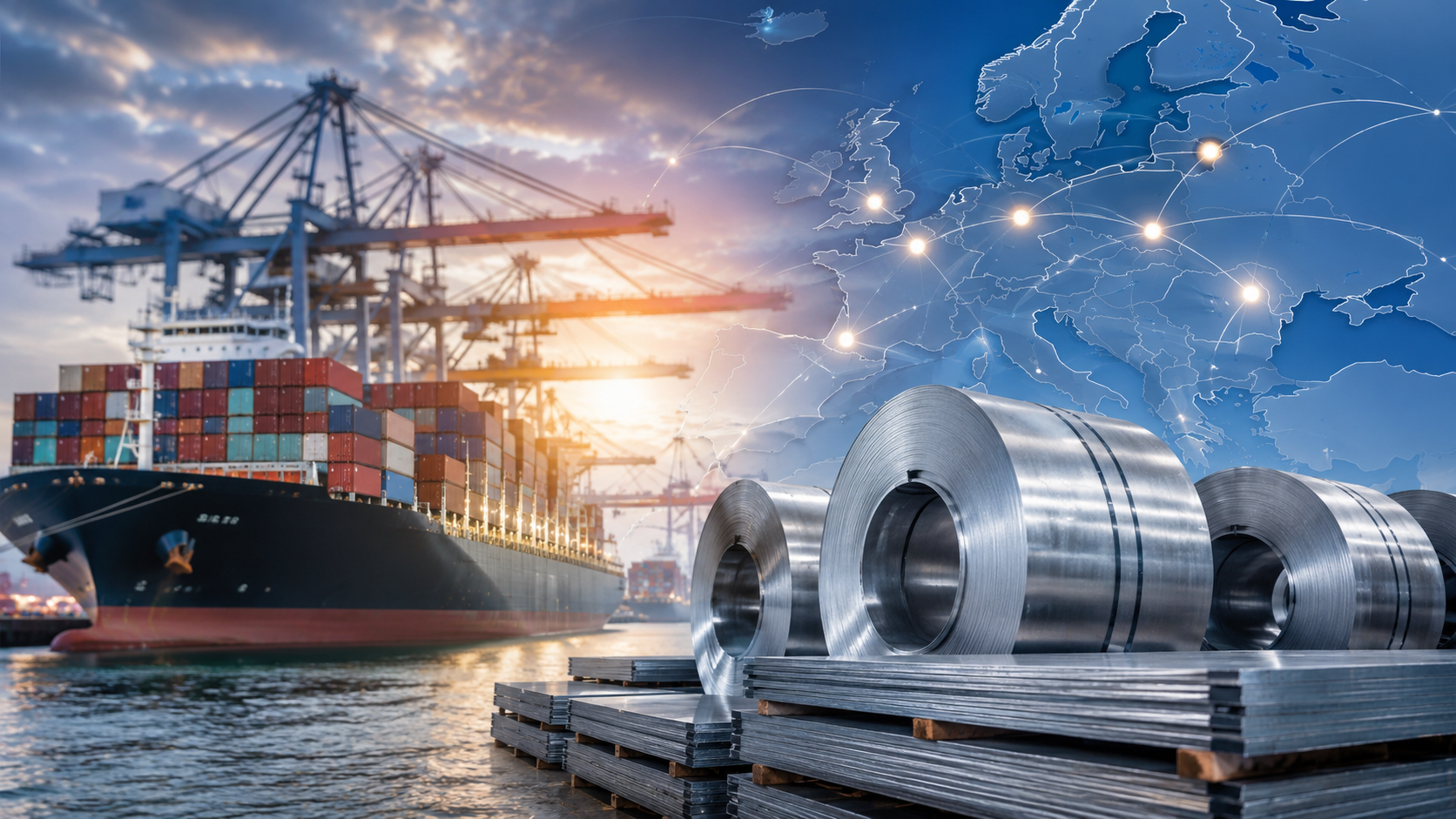
The global steel industry is increasingly focused on carbon emissions, energy efficiency, and the environmental impact of steel production. One regulation that is having a significant impact on international steel trade is the Carbon Border Adjustment Mechanism (CBAM), established by the European Union.
CBAM is designed to address carbon emissions associated with certain carbon-intensive goods imported into the EU. Iron and steel are among the industries covered by CBAM, along with cement, aluminum, fertilizers, electricity, and hydrogen. The EU's definitive CBAM regime took effect on January 1, 2026, following the transitional reporting period that ran from 2023 through 2025.
For steel suppliers, importers, manufacturers, and companies involved in international supply chains, understanding CBAM can be important when sourcing steel for projects connected to the European market.
What Is CBAM?
CBAM stands for Carbon Border Adjustment Mechanism. It is an EU policy designed to put a carbon price on the embedded emissions associated with certain goods imported into the European Union.
The purpose is to reduce the risk of carbon leakage. Carbon leakage can occur when production moves from regions with stronger climate policies to countries where carbon-related costs or regulations are less stringent.
Under CBAM, the EU seeks to ensure that imported products covered by the regulation account for the carbon emissions generated during their production. The mechanism is intended to complement the EU Emissions Trading System (EU ETS) and encourage lower-carbon industrial production.
Why Does CBAM Matter to the Steel Industry?
Steelmaking can be energy intensive, and the emissions associated with producing steel can vary significantly depending on the production technology, raw materials, energy sources, and manufacturing process.
For example, steel produced using an electric arc furnace (EAF) can have a different emissions profile from steel produced through a traditional blast furnace/basic oxygen furnace route. The source of electricity used by an EAF can also affect the overall emissions associated with the material.
Because iron and steel are specifically included within CBAM, carbon emissions associated with covered steel products entering the EU can become an important consideration in international steel procurement.
For companies supplying steel into European markets, information about the production process and associated embedded emissions may therefore become increasingly important.
When Did CBAM Take Effect?
CBAM was introduced in phases.
The transitional period ran from October 2023 through December 2025. During this period, importers were primarily required to report information about the embedded emissions of covered products without purchasing CBAM certificates.
The definitive CBAM regime began January 1, 2026. Under the definitive system, qualifying EU importers are responsible for declaring embedded emissions and meeting the associated certificate requirements.
The first CBAM declaration covering 2026 imports is due by September 30, 2027, and importers will surrender the corresponding certificates.
What Steel Products Are Covered?
CBAM does not simply apply to every steel product or every steel transaction. Coverage is determined by the specific products and Combined Nomenclature (CN) codes identified under the CBAM regulation.
Iron and steel products are included within the mechanism, with the applicable product classifications specified by the EU. Companies involved in international steel trade should therefore evaluate the exact product classification rather than assuming that all steel is automatically subject to CBAM.
This distinction is particularly important for steel distributors and manufacturers that purchase a variety of products, such as:
- Steel sheet
- Steel plate
- Steel bar
- Steel structural products
- Steel pipe and tube
- Fabricated steel components
- Other iron and steel products
The applicability of CBAM depends on the product's classification and the circumstances of the import.
How Does CBAM Affect Steel Importers?
Under the definitive regime, EU importers of covered CBAM goods must meet specific authorization, reporting, and certificate requirements.
As of 2026, EU importers or their indirect customs representatives importing more than the 50-tonne annual mass threshold for CBAM goods are required to apply for authorized CBAM declarant status. Authorized declarants report the embedded emissions of imported goods and purchase CBAM certificates corresponding to those emissions.
CBAM certificate prices are linked to the EU carbon market. For 2026, certificate prices are calculated using quarterly averages of EU Emissions Trading System allowance auction prices. Beginning in 2027, the pricing mechanism moves to a weekly average.
If an importer can demonstrate that a carbon price was already paid in the country where the goods were produced, the corresponding amount may be deducted under the CBAM rules.
Why Steel Suppliers May Need Better Emissions Data
Although the CBAM financial obligations generally fall on the EU importer, steel producers and suppliers outside the EU can play an important role in providing the information needed for CBAM compliance.
Importers can use actual emissions data when calculating embedded emissions. When actual values are used, the producer in the third country must provide the necessary emissions information, including verified data where required. The European Commission also provides default values that can be used under the applicable CBAM rules.
This means steel producers and suppliers serving customers with EU-bound material may increasingly be asked for information such as:
- Steel production method
- Production facility information
- Embedded carbon emissions
- Energy consumption information
- Relevant precursor materials
- Carbon pricing information
- Documentation supporting emissions calculations
Having accurate material and production information can help customers navigate increasingly complex international supply-chain requirements.
EAF Steel and CBAM
The steel industry's transition toward lower-carbon production has increased interest in electric arc furnace steel.
EAF technology can use a high percentage of recycled steel scrap as a metallic input and relies primarily on electricity rather than the coal-intensive reduction process used in traditional blast furnace steelmaking. However, the actual emissions profile of EAF steel depends on factors including the electricity source, scrap ratio, process efficiency, and other production variables.
Consequently, simply identifying steel as "EAF steel" does not provide a complete picture of its carbon footprint.
For companies evaluating steel based on environmental performance, reliable production-specific emissions information can be more useful than relying solely on the name of the production technology.
CBAM and the Steel Supply Chain
CBAM is also increasing the importance of transparency throughout the steel supply chain.
A steel distributor may purchase material from domestic mills, foreign mills, processors, or other suppliers. When material is ultimately destined for the European market, customers may need additional information about where and how that material was produced.
This can make traceability and documentation increasingly valuable.
Mill test reports already provide important information about steel chemistry, mechanical properties, heat numbers, and applicable specifications. CBAM-related information is different because it focuses on the emissions associated with producing the material.
For international customers, the ability to connect a steel product with its mill, production route, and relevant emissions information can become an important part of supply-chain management.
What Should Steel Buyers Consider?
Companies purchasing steel for international projects should consider CBAM early in the procurement process.
Important questions may include:
- Where will the steel ultimately be used?
- Will the material be imported into the EU?
- Is the specific steel product covered by CBAM?
- What is the product's applicable CN code?
- Where was the steel produced?
- What steelmaking process was used?
- Can the producer provide actual embedded-emissions data?
- What documentation will the importer require?
Addressing these questions early can help reduce unexpected documentation requirements and supply-chain complications.
CBAM and the Future of Steel Procurement
CBAM represents a broader shift toward incorporating carbon emissions into international industrial supply chains.
For steel buyers, traditional purchasing considerations such as price, grade, dimensions, availability, mechanical properties, and delivery time may increasingly be accompanied by questions about production methods and carbon intensity.
This does not mean that every steel buyer will have a direct CBAM obligation. Rather, companies involved in international supply chains should understand how the regulation can affect their customers, suppliers, and sourcing decisions.
The trend also reinforces the importance of working with steel suppliers that understand material specifications, mill documentation, international sourcing, and the evolving requirements surrounding steel production and emissions data.
Working With a Steel Supplier
Selecting the right steel involves more than finding a material that meets a particular grade or dimensional requirement. For customers involved in international trade, the origin, production method, documentation, and regulatory requirements can also be important considerations.
A knowledgeable steel supplier can help customers understand available material options, identify applicable specifications, coordinate material documentation, and work with mills and processors to support supply-chain requirements.
As CBAM and other carbon-related regulations continue to influence global steel markets, having accurate information about the steel being purchased can help companies make more informed sourcing decisions.
The Bottom Line
The Carbon Border Adjustment Mechanism (CBAM) is an important development for the global steel industry. With iron and steel included among the products covered by the EU regulation and the definitive regime now in effect, companies involved in steel production, distribution, importing, and manufacturing should understand how CBAM can affect international supply chains.
For steel suppliers and buyers, the key issues include product classification, country of origin, production methods, embedded carbon emissions, documentation, and traceability.
While CBAM is an EU regulation, its effects can extend beyond European borders because steel moves through interconnected global supply chains. Understanding these requirements now can help steel companies and their customers prepare for a marketplace where material performance and cost may increasingly be considered alongside the carbon intensity of production.
Updated August 2026- as CBAM rules are evolving